ENGINEERED IN ESTONIA · LOW-PRESSURE COLD SPRAY
Cold spray.
More life
for metal.
Equipment and metal powders for local repair, corrosion protection and functional coatings. Find the system for your part and a process you can validate.
Understand the cold spray process
Without melting the powder.
THE PROCESS
Solid particles. New possibilities.
Metal on metal.
Without the melt.
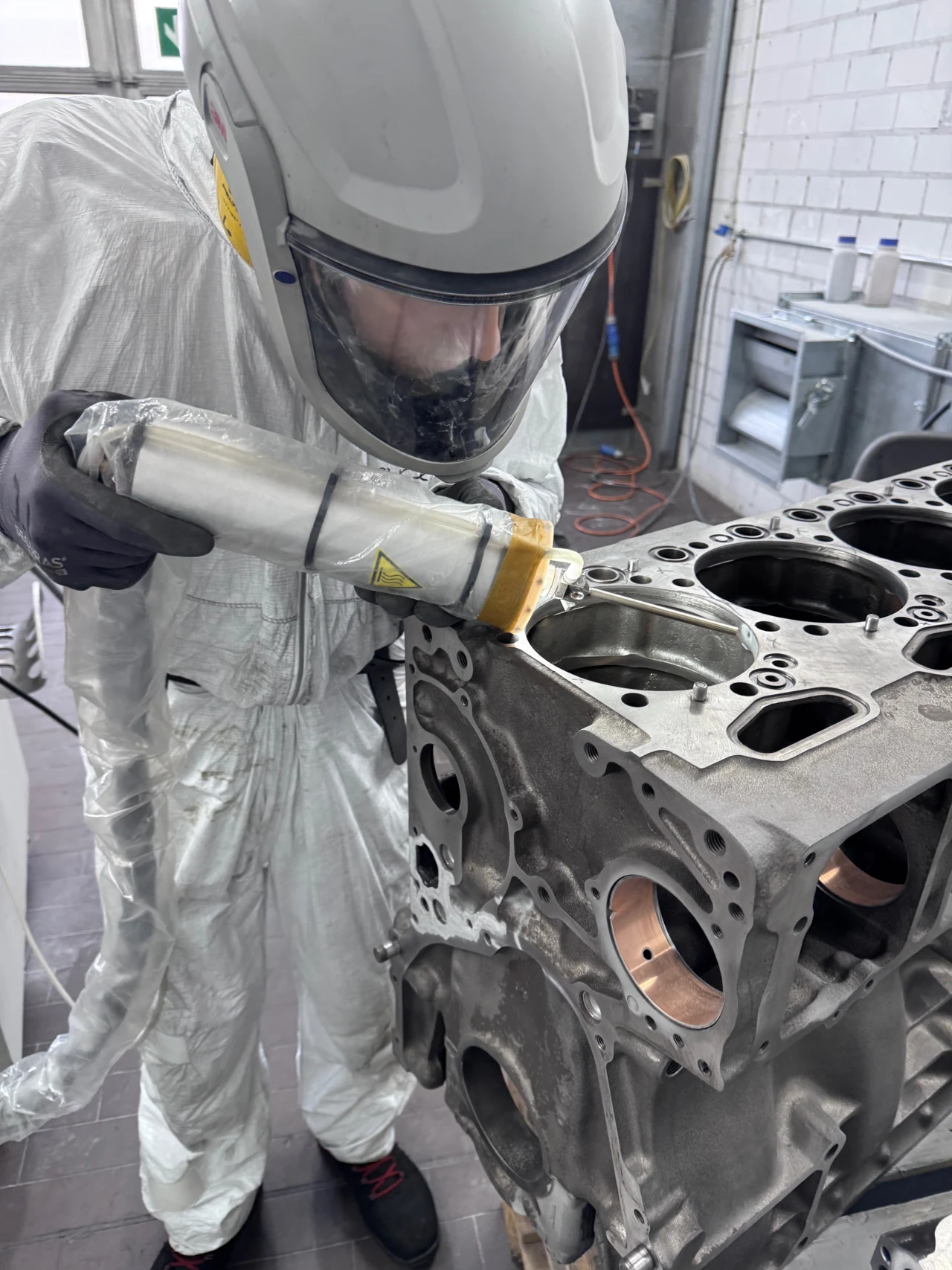
A high-speed stream of solid powder particles builds a coating on a prepared surface. The metal bonds through impact, rather than melting.
Low-pressure cold spray uses compressed air, an electric gas heater and a de Laval nozzle to accelerate particles. It opens a practical route to local repair and functional surfaces, with less melting-related thermal impact.
Explore the process and its limitsINSIDE LOW-PRESSURE COLD SPRAY
Follow the energy. Watch the coating grow.
Swipe the diagram to follow the complete process →
Compressed air flows from the compressor into the system.
The heating element transfers energy to the gas.
The nozzle converts gas energy into a high-speed stream. Powder enters downstream of the throat in this schematic.
The gas heats and accelerates solid particles. Suitable particles bond on impact and build the coating.
Illustrative flow, not a scale or speed simulation. Inlet position depends on nozzle design. Gas temperature is not particle temperature; the powder is not melted. Bonding depends on the powder, substrate and process conditions.
Put material where it is needed.
Explore conductive and protective layers.
Validate the powder, surface and result together.
THE EQUIPMENT
Three platforms. One process.
Built around
the way you work.
WORKSHOP & AUTOMATION
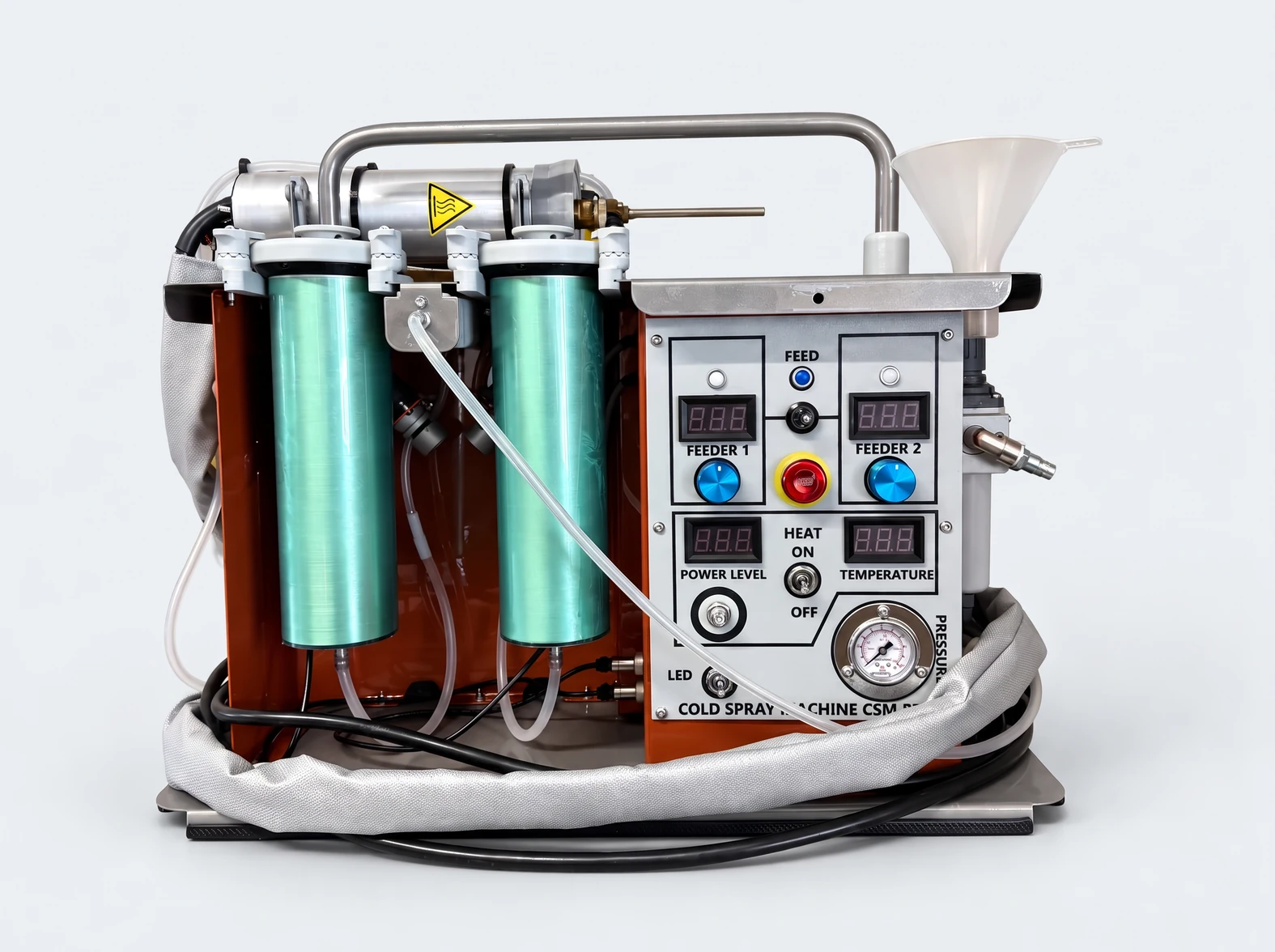
CSM270
A workshop platform for recurring jobs and process development. Two powder feeders support instant switching, with a control interface for automation.
System choice starts with your part, powder and available utilities.
9 bar max. inlet
Up to 3.3 kW
Dry, filtered air
Dust extraction
THE APPLICATIONS
Start with the part. Define the result.
More life.
More function.
Explore the role a deposited metal layer could play in your component.
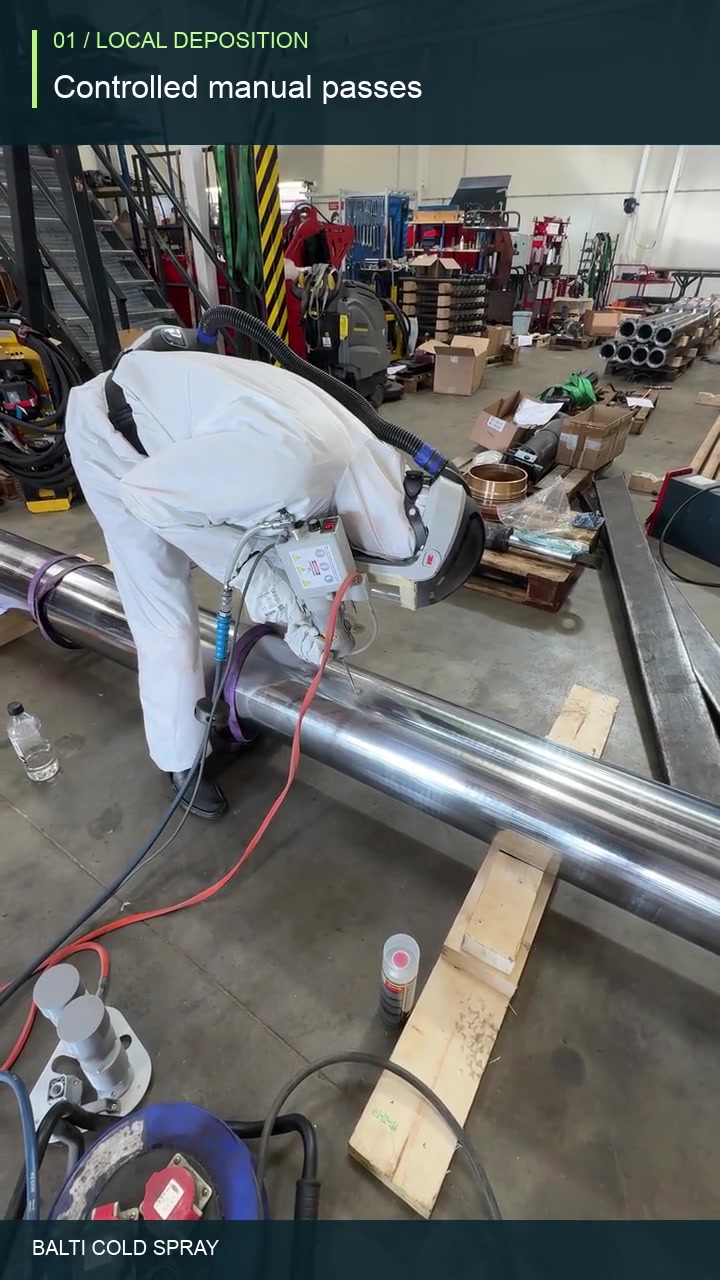
LOCAL METAL DEPOSITION IN THE WORKSHOP.Assess housings, seats and other accessible areas for local metal build-up. Plan the coating allowance and final machining together.
CHECK: adhesion · thickness · final dimensionsCopper-, aluminium-, zinc- or tin-based powders may support different surface functions. Select the powder and verify the finished coating in its intended environment.
CHECK: electrical resistance · corrosion · adhesionExplore new powder–substrate combinations or functional metallization. Preliminary development work includes conductive metal coatings on PEEK; long-term performance remains application-specific.
CHECK: repeatability · thermal cycling · service lifeThese are application directions. A representative trial determines suitability for your actual component.

Hydraulic cylinder rod repair with CSM360
Local deposition, a close-up of the treated area and hand finishing — combined into one 42-second video.
▶ Watch the repair case
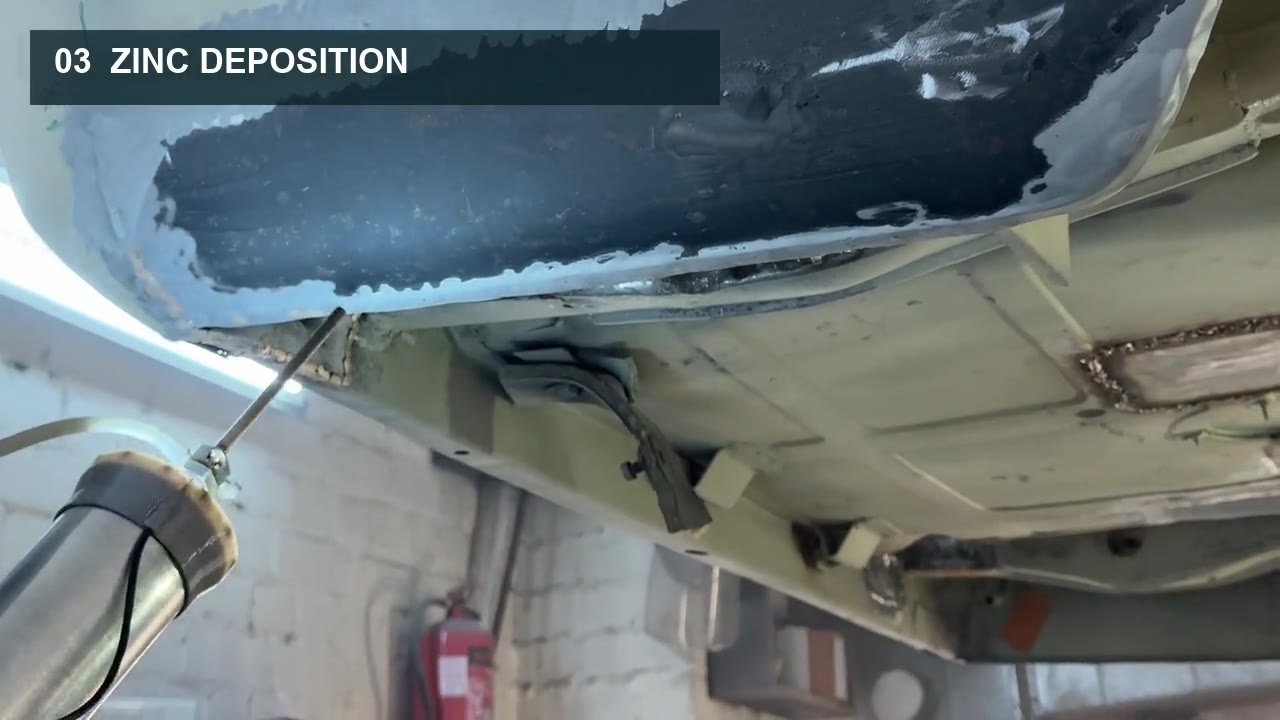
Car body panel: preparation to zinc coating
See surface preparation, the change at CSM360’s two-feeder powder station and manual deposition in a 39-second workshop edit.
▶ Watch the zinc coating case12 APPLICATION SCENARIOS
What could cold spray do for your part?
Explore bearing seats, corrosion pits, electrical contacts, moulds and development materials, with candidate powders and the checks that matter.
THE MATERIALS
Powder. Substrate. Purpose.
The right powder.
For the right job.
The metal name is only the beginning. Composition, particle size and preparation all influence the layer you create.
Confirm the exact grade, current availability, technical data and safety data before ordering.
Find your powder in the material guide
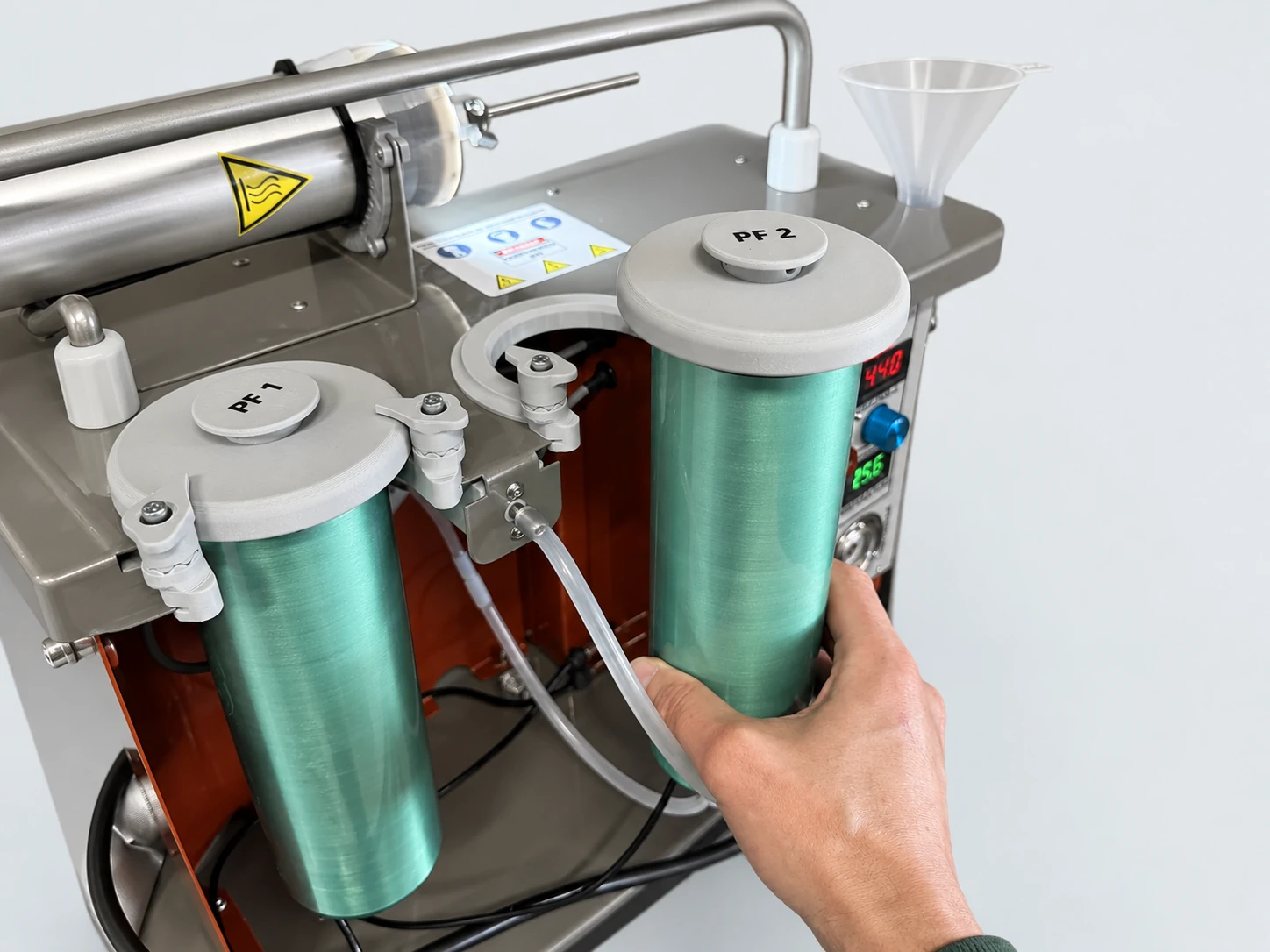
Powder selection.
Nozzle access.
Surface preparation.
17 LISTED POWDER GRADES
Find the right composition for the task.
Search by metal, grade or application. Compare repair, protection, conductivity and preparation powders.
MAKE AN INFORMED DECISION
Clear answers. Better decisions.
A good fit?
Let’s be specific.
Cold spray is a process to qualify for a job. These questions help you decide where to start.
A small, measured trial.
Agree the target result, test a representative sample and review the evidence before committing to production.
Talk through your applicationWhat is a promising application?+
An accessible surface needing local metal build-up or a functional coating, where the chosen powder can bond and the result can be tested. Substrate condition, nozzle access and service requirements matter as much as the equipment.
When might it be the wrong process?+
Poor nozzle access, unstable or contaminated substrates, unsuitable powders, or requirements outside a qualified coating’s performance may rule it out. Structural cracks and safety-critical repairs need an approved engineering procedure; a deposited layer alone does not establish safety.
Does “cold” mean there is no heat?+
No. The current CSM specifications list gas temperature at the nozzle inlet of 200–600 °C. This is not the particle or part temperature. The powder remains solid in the cold spray process, while the component may still heat up. Thermal effects must be checked on sensitive parts.
What does the workshop need?+
The supplied CSM specifications state 0.4 m³/min air consumption at 5–8 bar operating pressure, a maximum inlet pressure of 9 bar and up to 3.3 kW electrical power. Check air delivery under load, drying and filtration, electrical supply, appropriate dust extraction, powder handling and operator protection.
Can any metal powder be used?+
No. Composition, particle size, morphology, feed behaviour and the powder–substrate combination affect deposition. Use a compatible grade and confirm its technical and safety data. A powder name alone does not establish availability or compatibility.
How do we choose a system and estimate cost?+
Share the component, required coating, repair area, target thickness and expected quantity. The estimate should consider equipment, powder, compressed air, preparation, spraying, finishing and inspection. A trial helps establish realistic powder use and cycle time.
How should the workplace be arranged?+
Use a controlled spray area with suitable extraction, filtration and powder collection. Match these controls to the powder safety data and task. Plan clean powder storage, surface preparation, operator protection and inspection alongside the spraying equipment.
Can cold spray create conductive layers on PEEK?+
Preliminary development work has explored direct metal deposition on engineering polymers, including PEEK, for conductive and solderable surfaces. Gas settings, stand-off distance, powder composition and substrate preparation all matter. The results are a starting point for further testing, not a general rating for every polymer part. Validate adhesion, electrical performance, thermal cycling and environmental durability.
Where can I find model specifications and powder grades?+
Read the dedicated CSM360, CSM270 and CSM108.2 pages for equipment data and setup requirements. Use the powder selection guide to compare compositions and applications, or contact BaltiCold Spray to discuss your part.
LET’S TALK
BaltiCold Spray OÜ · Tallinn, Estonia
Let’s find the right process.
Tell us what you want to restore, protect or improve. We’ll start with the application.
info@balticoldspray.com +372 5598 7459FOR A USEFUL FIRST CONVERSATION
Bring your part.
And the questions.
- Material and dimensions
- Photographs or a drawing
- Damage or required coating function
- Operating conditions and acceptance criteria
- Expected quantity or production volume
COMPANY DETAILS
BaltiCold Spray OÜ
- Workshop location
- Tallinn, Harjumaa, Estonia
- Company registration
- 12931071
- VAT number
- EE102542356
- Telephone
- +372 5598 7459
Bank & invoicing details +
- Bank
- Swedbank AS
- Bank address
- Liivalaia 8, 15040 Tallinn, Estonia
- IBAN
- EE38 2200 2210 6298 1661
- SWIFT / BIC
- HABAEE2X
